
Small Pantry Organization Ideas
Practical small pantry organization ideas — decanting for a shelf you can actually read at a glance, using the back of the door, zoning shelves by how often you reach for something, and running a pantry system with no dedicated closet.
In This Guide
A Small Pantry Works Best as a System, Not a Shelf.
A small pantry rarely fails because there isn't enough room — it fails because nothing on the shelf is grouped, zoned, or decanted, so every trip to grab something turns into a search.
This guide walks through four practical, pantry-specific changes: decanting for a shelf you can actually read at a glance, putting the back of the door to work, zoning shelves by how often you actually reach for something, and running the whole system in a single cabinet if there's no dedicated pantry closet at all.
None of it requires new cabinetry. Every idea here works with containers, a hook, and a shelf plan that matches how the pantry is actually used.
01 · Decant for a Shelf You Can Actually Read
A Glance Should Tell You What's Running Low.
Original packaging is built for a supermarket shelf, not a small pantry — tall boxes, half-empty bags, labels facing every direction. See small kitchen storage ideas for the basic case for decanting; this is the deeper version, specifically for a pantry where shelf space is the whole constraint, not just one problem shelf.
The real win isn't just the space saved — it's what a decanted shelf lets you see without touching anything. A matching set of containers, all filled to a similar level, makes low stock obvious at a glance. A crumpled, half-full bag hides that information until you pick it up and look inside.
This is worth doing properly rather than partially — a shelf with three matching containers and two leftover bags still has to be scanned item by item, which erases most of the benefit. Committing to a full shelf at a time, rather than a few random items, is what actually makes the glance-and-know system work.

- 01Decant a Whole Shelf, Not a Few ItemsA shelf that's part original packaging, part container still has to be checked item by item.
- 02Fill Containers to a Similar LevelMatching fill levels make a low container obvious without opening anything.
- 03Choose Stackable Over Just AirtightA container that seals but doesn't stack still eats the same shelf space as the box it replaced.
- 04Only Decant What You Actually RestockA one-off ingredient bought once isn't worth the container — save the system for regular staples.
RoomMinded Tip
A decanted pantry shelf doesn't just look tidier — it tells you what's running low before you have to check.
02 · Use the Back of the Door
The Door Is Storage, Not Just an Entrance.
A pantry door swings through the room but does nothing for the pantry itself, which is a waste in a space where every shelf is already spoken for — the flat surface on the back of it is reachable, visible when the door's open, and almost always left completely empty.
Small, frequently-grabbed items are the best fit for it: spice jars, seasoning packets, small bagged snacks — anything you'd otherwise dig around for on a crowded shelf. A hook or clip mounted there holds a bagged item or a small pouch upright and visible, out of the way of the shelves behind it.
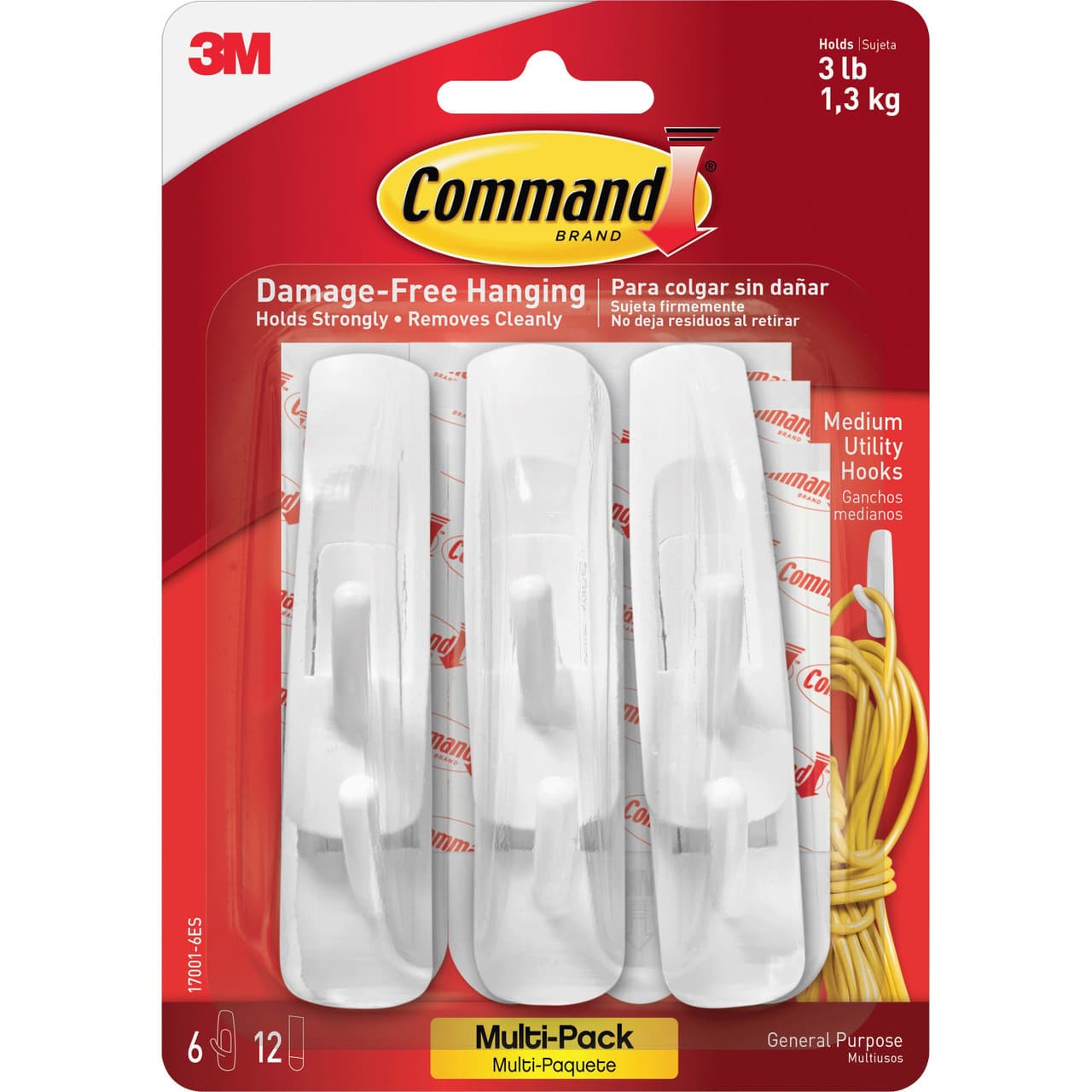
Damage-free mounting matters here more than almost anywhere else in the kitchen, since a pantry door is rarely something a rental lease allows drilling into. An adhesive hook holds real weight without a mark left behind when it comes off.
- 01Reserve the Door for Small, Frequent ItemsSpices and snack pouches suit it — anything large or rarely used belongs on a shelf instead.
- 02Hang, Don't Shelve, on a DoorA hook or clip works with the door's swing — a rigid shelf usually doesn't have the clearance.
- 03Check the Weight Rating FirstAdhesive hooks vary in what they'll hold — confirm before hanging anything with real weight.
- 04Leave Clearance for the Door to CloseAnything mounted on the back needs to clear the shelves behind it once the door shuts.
03 · Zone Shelves by How Often You Reach for Something
Eye Level Is Prime Real Estate. Use It Well.
Most pantries get filled in whatever order things were unpacked, which means a bag of flour used twice a year can end up at eye level while the pasta you reach for three times a week is crouched down on the bottom shelf.
Zoning by frequency instead of arrival order fixes this: the shelf at eye level holds what gets used most, the high shelf holds what's reached for rarely, and the low shelf — the one that needs bending down for — holds either the rare stuff too, or the heaviest items, since bending for something heavy is easier than reaching overhead for it.
A single wall-mounted shelf can be enough to make this system work even in a small pantry — it doesn't require a full cabinet's worth of shelving, just a deliberate decision about what goes where instead of whatever fit when it was unpacked.

- 01Eye Level Is for Daily StaplesThe shelf you see without looking up or down should hold what actually gets used most.
- 02High Shelves Are for What's Rarely Reached ForSave the hardest-to-reach spot for items used a few times a year, not the ones used weekly.
- 03Low Shelves Suit Heavy or Rare ItemsBending down for something heavy beats reaching overhead for it.
- 04Re-Zone After Buying Habits ChangeA shelf plan set up once can drift out of date — revisit it if what you actually use has shifted.
RoomMinded Tip
A pantry shelf works best when what you use most is exactly where your hand already goes.
04 · No Pantry Closet? Let One Cabinet Do the Job
You Don't Need a Whole Room for This.
A lot of small kitchens don't have a dedicated pantry closet at all — just whatever cabinet ended up holding the dry goods, or a single shelf unit doing double duty. That's a real constraint, not a failure to have "real" pantry storage, and it works fine once it's treated as its own system rather than an overflow spot.
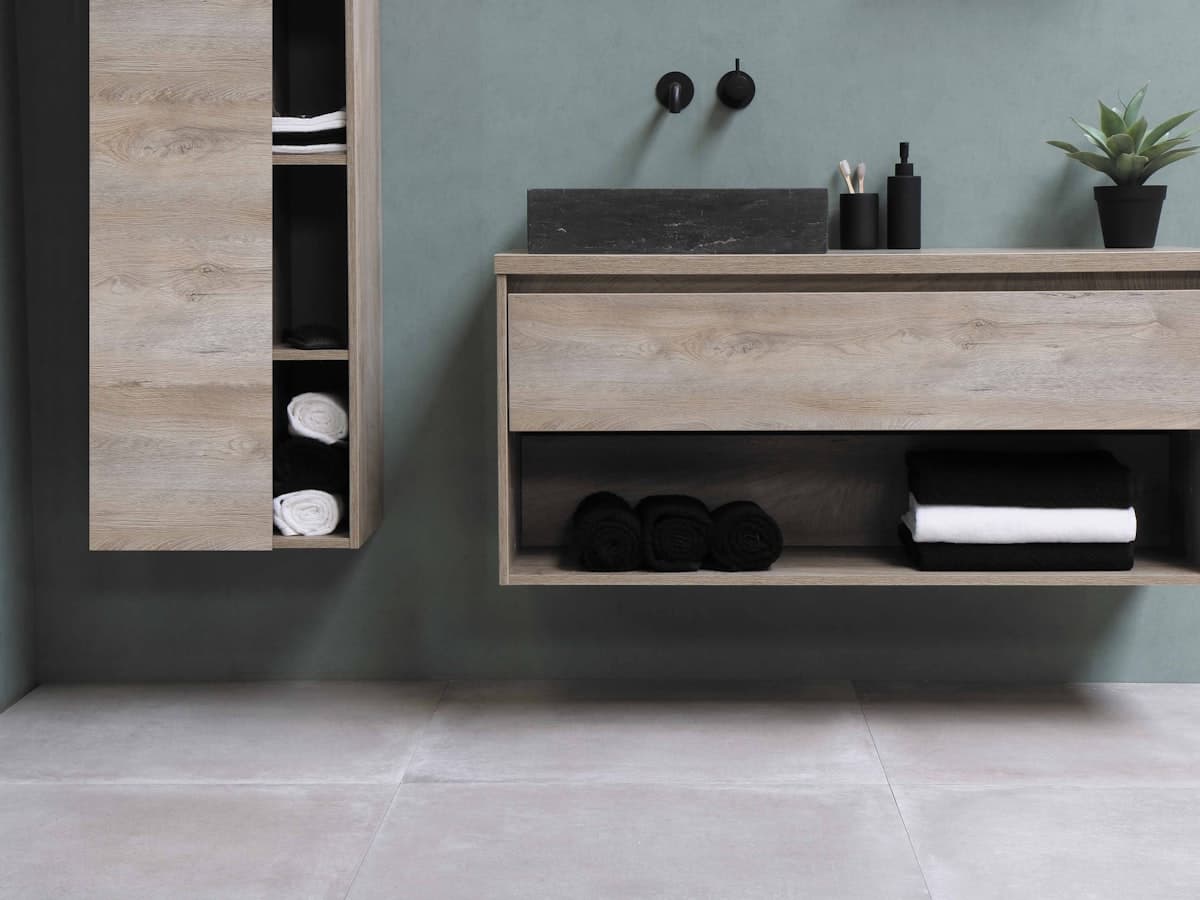
A narrow, freestanding cabinet is the most direct fix if there's a gap for one — it doesn't need to be purpose-built for a pantry to work as one; the same slim cabinet that fits beside a fridge or in a narrow bathroom footprint fits a corner of a kitchen just as well, and gives dry goods an enclosed home that isn't competing with plates and pots for cabinet space.
The same decanting and zoning ideas from earlier in this guide apply just as directly to one cabinet as they would to a full closet — the system doesn't scale down badly, it just scales down.

Solves This
VonHaus Victoria Slim Bathroom Storage Cabinet
A slim, freestanding cabinet sized for a tight footprint — works just as well as a stand-in pantry as it does anywhere else.
£49.99 · Shop This PickTake This With You
- 01Treat One Cabinet as Its Own SystemA single cabinet doing pantry duty works best decanted and zoned like a full pantry, not left as overflow.
- 02A Slim Cabinet Fits Where a Full One Won'tA narrow freestanding cabinet can slot into a gap a built-in pantry closet never could.
- 03Prioritize What's Used Most in the Smallest FootprintWith less shelf space overall, frequency-zoning matters even more than it does in a full pantry.
- 04Don't Wait for a Bigger Kitchen to StartThe same decanting and zoning system works at any scale — it doesn't need a dedicated room to be worth doing.
Next·Bring the Same System to the Fridge
RoomMinded Picks
Pieces That Make
This Easier.
A few general storage products from this guide, reframed for dry-goods shelving in a small pantry.
Storage · Stackable Baskets
Strata 21L Urban Storage Basket with Lid, Cool Grey
A stackable, lidded bin for decanted dry goods — matching containers filled to a similar level make low stock obvious at a glance.
£6.99
View ProductStorage · Floating Shelves
Set of 4 Latitude Floating Shelves
Wall-mounted shelving that lets a single shelf unit run a full frequency-zoned pantry system, even without a dedicated closet.
£12.99
View ProductRenter-Friendly · Adhesive Hooks
3M Command Medium Utility Hooks (White)
A damage-free hook for the back of the pantry door — holds a small bagged item or spice pouch upright and visible.
£17.08
View ProductStorage · Slim Cabinet
VonHaus Victoria Slim Bathroom Storage Cabinet
A slim, freestanding cabinet sized for a tight footprint — works just as well as a stand-in pantry as it does anywhere else.
£49.99
View ProductThese are curated recommendations. If you purchase through one of our links, RoomMinded may earn a commission at no extra cost to you.
Keep Exploring
More Ideas for
Better Spaces.
A few more practical RoomMinded guides worth reading next.
Storage & Organization
Small Kitchen Storage Ideas That Actually Work
Practical small kitchen storage ideas — using cabinet height, decanting into matching containers, and putting walls and awkward gaps to work.
Read Guide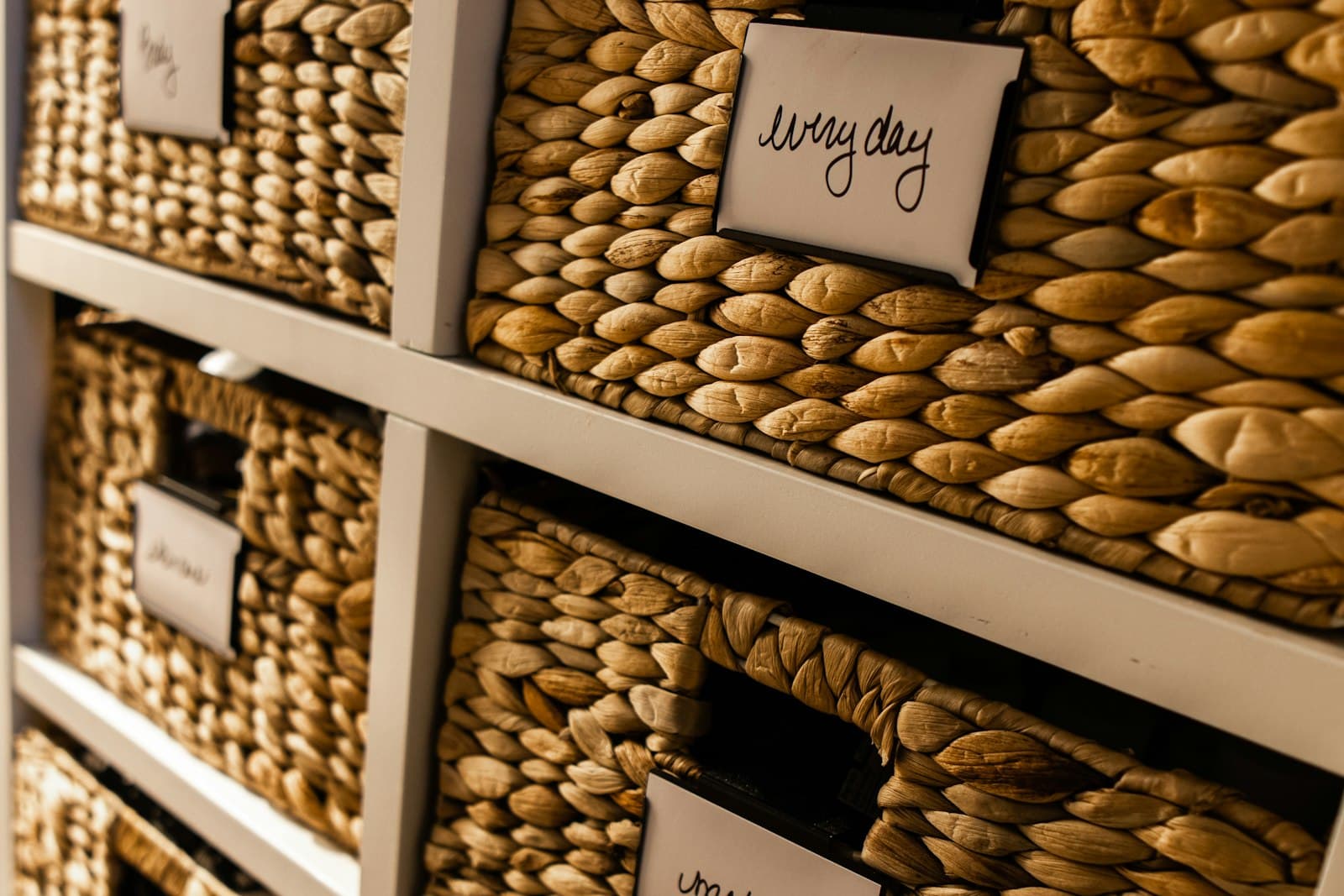
Storage & Organization
Fridge Organization Ideas That Actually Work
Practical fridge organization ideas — zoning the door for condiments, grouping food into clear bins by category, and a first-in-first-out system for what's about to expire.
Read Guide
Storage & Organization
Small Laundry & Utility Closet Organization Ideas
Practical small laundry and utility closet organization ideas — stacked shelving over the machines, a no-drill drying setup, and sorting bins for a closet with no floor space to spare.
Read GuideGood to Know
Questions You
Might Have.
A few practical answers to common questions.
Yes, more than in a larger kitchen — with less shelf space overall, uniform containers that stack and show fill level at a glance make a bigger relative difference.
Small, frequently-grabbed items like spice jars and snack pouches — anything large or rarely used is better suited to a shelf.
Zone by frequency, not arrival order — eye level for daily staples, high shelves for rarely-used items, low shelves for the rest or anything heavy.
Yes — a single cabinet or wall-mounted shelf unit can run the same decanting and zoning system as a full closet, just at a smaller scale.
Damage-free adhesive hooks hold real weight and remove cleanly — check the weight rating before hanging anything on a door or wall.
Keep Making Your Space Work Better
Ready to Make
Your Space Work Better?
Explore more practical room ideas, smart solutions and thoughtfully chosen products for real homes and everyday living.