
Small Kitchen Storage Ideas That Actually Work
Practical small kitchen storage ideas — using cabinet height, decanting into matching containers, and putting walls and awkward gaps to work.
In This Guide
A Small Kitchen Rarely Runs Out of Space — Just a System for Using It.
Most small kitchens have more usable storage than it feels like — cabinet height above what's already stored, the wall above the counter, awkward narrow gaps beside appliances — all of it left empty simply because it doesn't look like storage until it's used deliberately.
This guide walks through four practical ways to get more out of a small kitchen: stacking instead of piling, decanting dry goods into containers that actually nest, using the walls and cabinet doors instead of just the counter, and fitting real storage into the awkward gaps most kitchens already have.
None of it requires new cabinetry or a renovation — every idea here works with what a small kitchen already has, used more deliberately.
01 · Use Every Inch of Cabinet Height
Cabinets Are Taller Than They Look Used.
Most kitchen cabinets are set up with one flat shelf and everything sitting directly on top of everything else — which means the actual usable height above each item is wasted, and anything at the back becomes invisible the moment something else is placed in front of it.
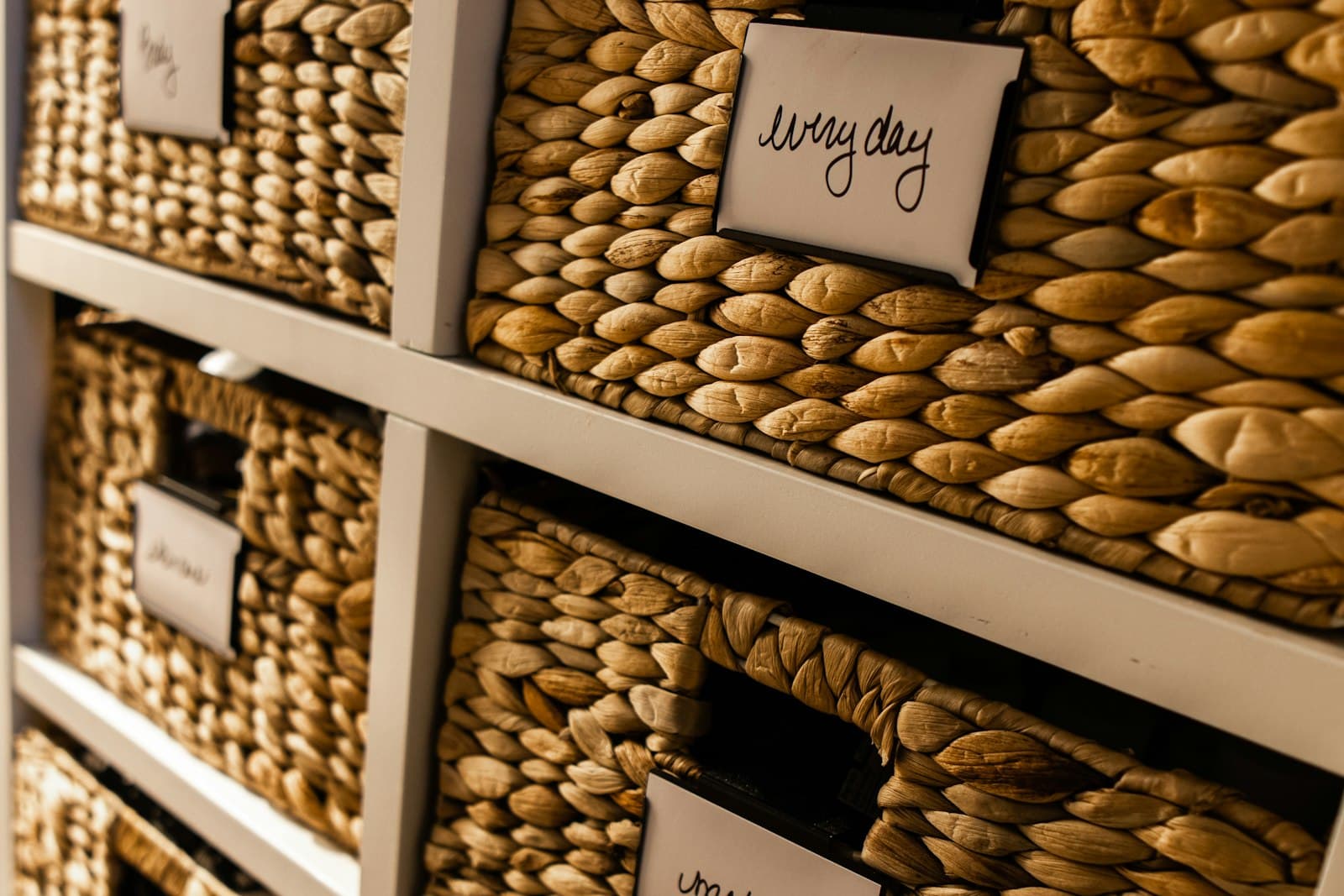
A stackable storage basket changes this: instead of one flat layer of loose items, a cabinet holds two or three stacked layers, each one still fully visible and reachable without digging through what's on top of it.
The same idea applies to the closet-organization thinking in small closet organization ideas — a kitchen cabinet is really just a smaller version of the same wasted-height problem.

- 01Stack Instead of Piling LooseStackable baskets turn one flat layer of clutter into several tiers, each still fully visible.
- 02Keep Daily Items on the Lower TierReserve the bottom stack level for what gets reached for most often.
- 03Group by Category, Not Just SizeA basket of baking items and a basket of snacks stay easier to find than one basket of everything.
- 04Leave the Top Shelf for Rarely-Used ItemsThe hardest-to-reach space in any cabinet should hold what's used least often.
RoomMinded Tip
A kitchen cabinet rarely runs out of space — it runs out of a system for using the space it already has.
02 · Decant Into Matching Containers
Original Packaging Wastes Shelf Space.
Flour bags, cereal boxes and pasta packets are all shaped for shipping and shelf display, not for stacking efficiently in a small pantry — their odd shapes and half-empty air pockets waste real cabinet space that a uniform container wouldn't.
Moving dry goods into a set of matching, stackable containers solves two problems at once: everything nests together instead of leaving gaps, and it's immediately obvious what's running low without opening every box to check.
This doesn't need to happen all at once — starting with whatever's currently the messiest shelf is enough to see the difference before deciding whether to do the rest of the pantry.

- 01Start With the Messiest ShelfDecanting one problem shelf first shows the benefit before committing to the whole pantry.
- 02Choose Stackable, Not Just AirtightA container that seals well but doesn't stack still wastes the same shelf space as the original packaging.
- 03Keep the Original Label or Add a New OneA matching container only helps if you can still tell what's inside without opening it.
- 04Decant What You Actually RestockIt's not worth the effort for something you buy once and rarely replace.
03 · Put the Walls and Door Backs to Work
Counter Space Isn't The Only Space.
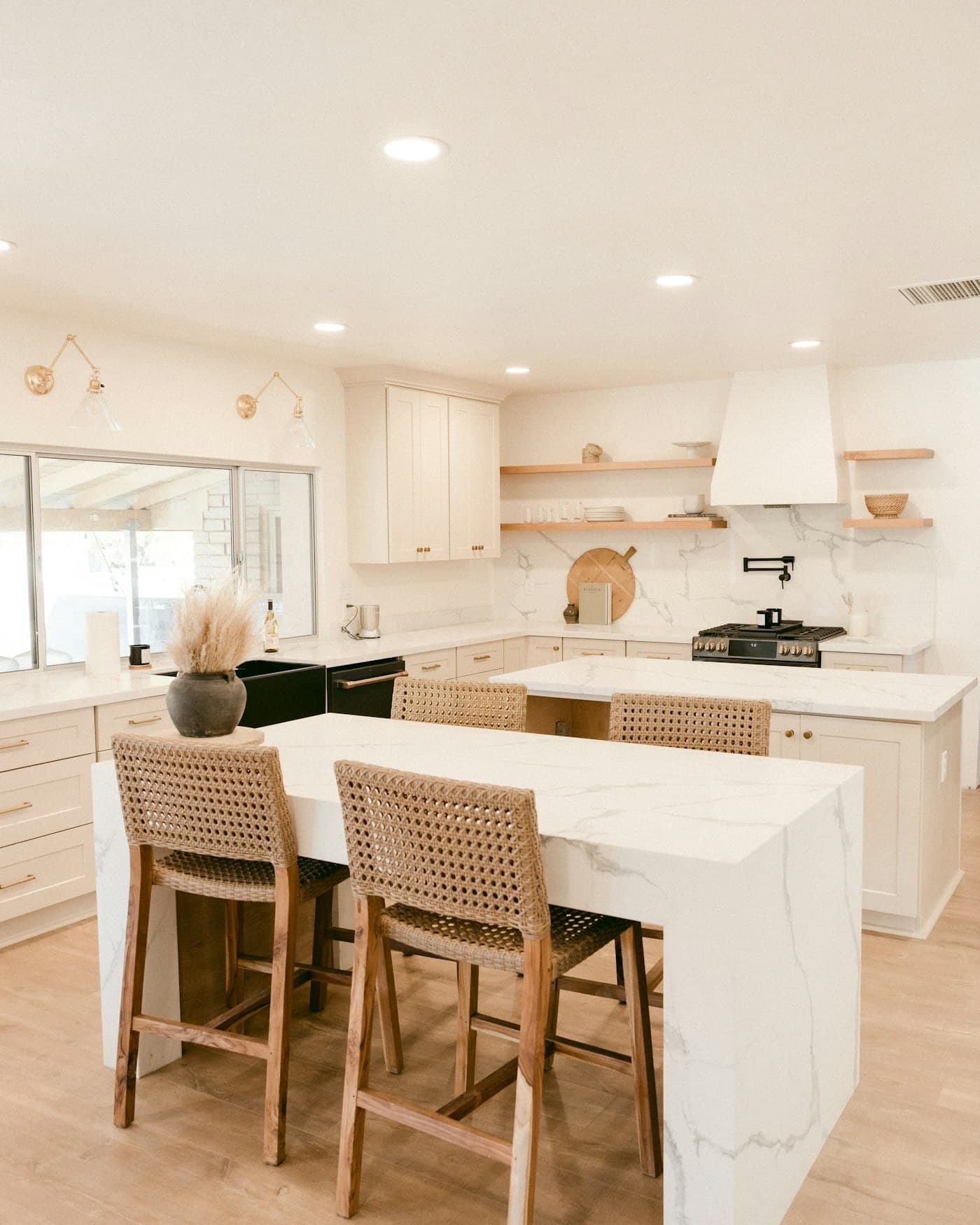
A small kitchen's counter and cabinet space fills up fast, but the wall above the counter and the inside of cabinet doors are almost always left empty — both are reachable, both are visible, and neither takes up any of the room's actual floor or counter footprint.
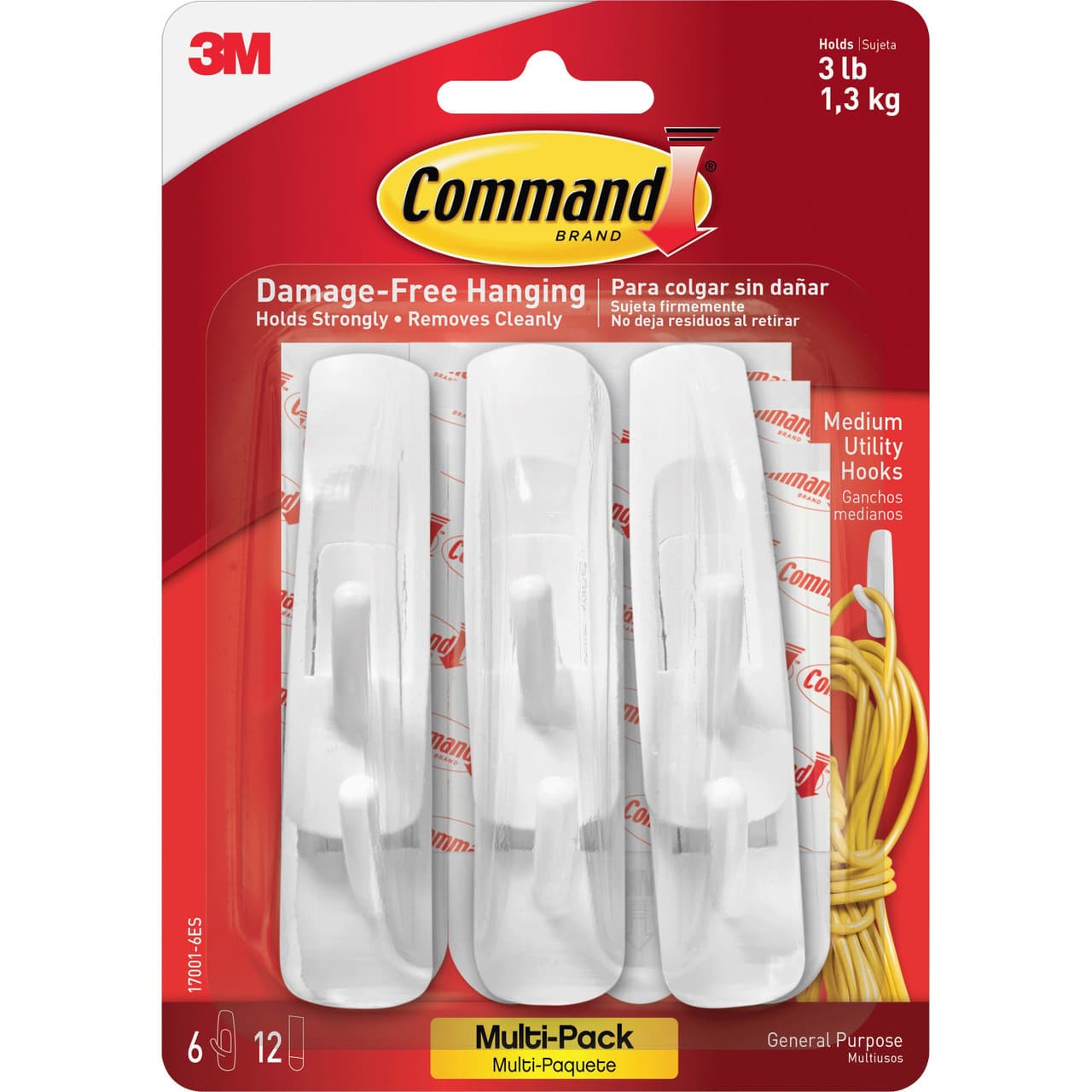
A set of open floating shelves above the counter holds everyday plates, mugs or jars without needing a single extra cabinet. Adhesive hooks on the inside of a cabinet door or beside the stove hold utensils, oven mitts or a towel — all instantly reachable, none of it taking up shelf space.
Both are damage-free, which matters if the kitchen is in a rental — see renter-friendly decorating ideas for more on furnishing a kitchen you can't permanently alter.
Solves This
3M Command Medium Utility Hooks (White)
Damage-free adhesive hooks for the inside of a cabinet door — hold utensils, oven mitts or a towel, remove cleanly when you move.
£17.08 · Shop This Pick
- 01Shelve the Wall Above the CounterOpen shelving turns unused wall space into everyday storage without adding a cabinet.
- 02Hook the Inside of Cabinet DoorsAdhesive hooks make use of space that's otherwise completely wasted.
- 03Keep Open Shelves to What Looks Tidy OutOpen storage works best for items you don't mind seeing — save closed cabinets for the rest.
- 04Choose Damage-Free Mounting in a RentalAdhesive hooks and lightweight shelving systems avoid drilling into rented walls.
RoomMinded Tip
The wall above a kitchen counter is some of the most reachable storage in the whole room, and it's usually empty.
04 · Fill the Awkward Gaps
The Narrow Spaces Count Too.
Almost every small kitchen has at least one awkward narrow gap — beside the fridge, at the end of a run of cabinets, in a corner too small for a full cabinet — that ends up empty simply because nothing standard fits it.
A slim storage cabinet is built specifically for these gaps: narrow enough to slide into a space a full cabinet never would, while still adding real enclosed storage for items that don't need to be on display — cleaning supplies, spare pantry stock, anything that doesn't need a shelf of its own.
Measuring these gaps before shopping for anything else is worth doing early — a narrow cabinet that fits a specific gap is far more useful than a slightly-too-wide one that has to go somewhere else instead.
Take This With You
- 01Measure Awkward Gaps FirstKnowing the exact width of a narrow gap avoids buying a cabinet that doesn't actually fit it.
- 02Use Narrow Gaps for Enclosed StorageA slim cabinet suits items you don't need visible — save open shelving for what you do.
- 03Don't Force a Full-Size Piece Into a Narrow SpaceA cabinet sized for the gap beats a larger one that technically fits but blocks movement.
- 04Revisit the Kitchen After Living With It a Few WeeksThe system that looked right on day one sometimes needs a small adjustment once it's in daily use.
Next·Explore more small-space storage ideas for the rest of the apartment.
RoomMinded Picks
Pieces That Make
This Easier.
A few products from this guide that make small kitchen storage easier to put into practice.
Storage · Stackable Baskets
Strata 21L Urban Storage Basket with Lid, Cool Grey
A stackable plastic storage basket with a clip-on lid, designed to nest and stack so it takes up as little cabinet space as possible.
£6.99
View ProductStorage · Floating Shelves
Set of 4 Latitude Floating Shelves
Wall-mounted shelves that add open kitchen storage above the counter without a single extra cabinet.
£12.99
View ProductRenter-Friendly · Adhesive Hooks
3M Command Medium Utility Hooks (White)
Damage-free adhesive hooks for the inside of a cabinet door — hold utensils, oven mitts or a towel, remove cleanly when you move.
£17.08
View ProductStorage · Slim Cabinet
Slim Storage Cabinet
A narrow floor cabinet built for awkward kitchen gaps — beside a fridge or at the end of a cabinet run.
$89
View ProductThese are curated recommendations. If you purchase through one of our links, RoomMinded may earn a commission at no extra cost to you.
Keep Exploring
More Ideas for
Better Spaces.
A few more practical RoomMinded guides worth reading next.
Storage & Organization
Fridge Organization Ideas That Actually Work
Practical fridge organization ideas — zoning the door for condiments, grouping food into clear bins by category, and a first-in-first-out system for what's about to expire.
Read Guide
Storage & Organization
Small Pantry Organization Ideas
Practical small pantry organization ideas — decanting for shelf visibility, using the back of the door, and zoning shelves by how often you reach for something.
Read Guide
Storage & Organization
Small Bathroom Storage Ideas That Actually Work
Practical small bathroom storage ideas — using the wall above the toilet, decanting into matching bottles, and adding damage-free hooks and under-sink storage.
Read GuideGood to Know
Questions You
Might Have.
A few practical answers to common questions.
Stackable baskets in one cabinet — it's low-cost, quick to set up, and the difference is immediately visible.
For anything you regularly restock, yes — it saves real shelf space and makes checking stock levels instant.
Some lightweight shelving and hook systems are designed to mount without drilling — check the weight rating against what you plan to store.
Items that don't need to be on display — cleaning supplies, spare pantry stock, anything without a dedicated shelf already.
Keep open shelves to items you'd be fine seeing daily, and move anything less tidy into closed cabinet storage instead.
Keep Making Your Space Work Better
Ready to Make
Your Space Work Better?
Explore more practical room ideas, smart solutions and thoughtfully chosen products for real homes and everyday living.