
How to Zone a Studio Apartment Without Walls
Practical ways to zone a studio apartment without permanent walls — using a rug to separate areas, open shelving as a room divider, lighting that signals each zone, and curtain or screen dividers that work in a rental.
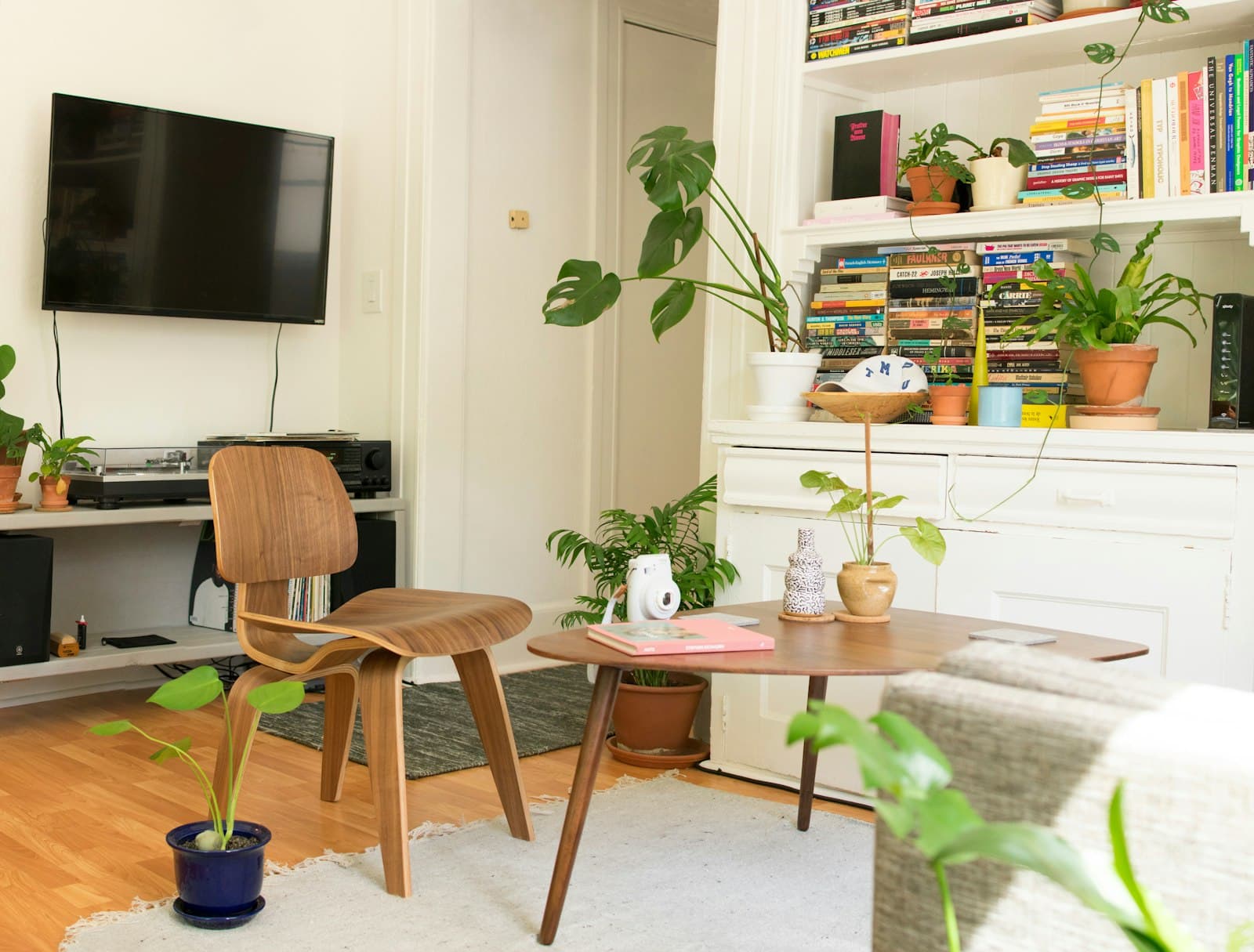
In This Guide
Four Ways to Divide a Room Without Ever Building a Wall.
Not every studio can zone itself with furniture placement alone — sometimes a sleep zone needs to close off entirely, or a work zone needs a clearer edge than a sofa's back can give it.
This guide walks through four specific, no-construction divider techniques: a rug as a visual boundary, open shelving pulled off the wall to act as a partition, lighting that signals which zone is 'on', and a curtain or screen divider for a rental.
Every idea here is fully reversible. None of it requires drilling into a wall you don't own, and all of it can be undone in an afternoon if the layout ever needs to change.
01 · Separate Zones With a Rug
A Rug Can Do What a Wall Won't.
A rug is the fastest, most reversible way to draw a boundary on the floor of a studio without touching a wall. The edge of the rug reads as the edge of a zone — step off it and you've stepped into a different part of the room, even though there's no actual threshold underfoot.
A rug under the seating area, bare floor or a second, differently textured rug under the desk, and a third defining the sleep zone signals a change of zone the same way a change of flooring does in a home with real hallways and doorways between rooms.
This is a narrower, more specific version of the furniture-led zoning covered in studio apartment layout ideas — that guide covers furniture placement and scale broadly; this one is specifically about the divider techniques that don't involve a wall at all, starting with the rug under your feet.
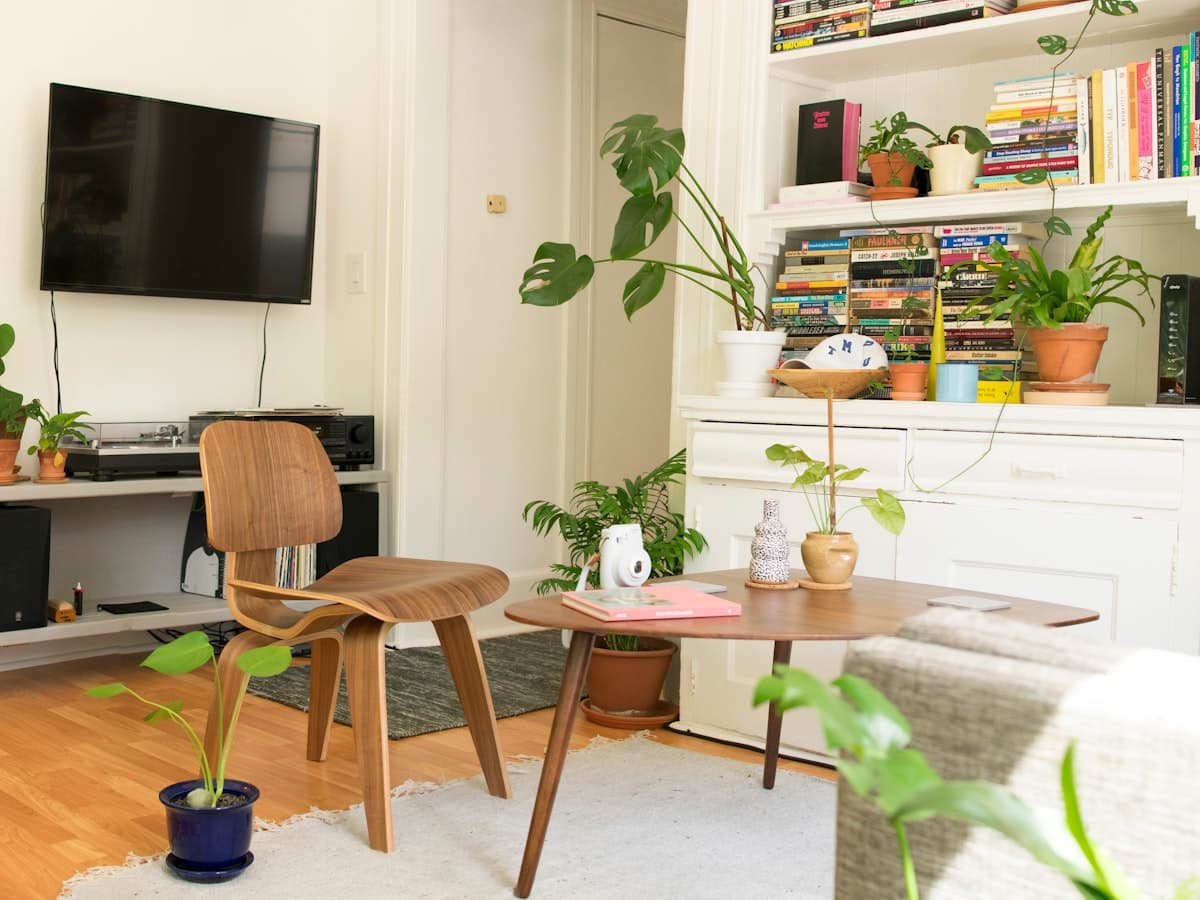
- 01Stop the Rug Short of the WallsA rug that doesn't reach every wall reads as a defined zone, not just flooring for the whole room.
- 02Use a Different Texture Per ZoneA change in pile or pattern signals a boundary more clearly than a rug in the same material throughout.
- 03Size the Rug to the Furniture, Not the RoomA rug sized for the seating group inside it — not the whole floor — keeps the zone's edges legible.
- 04Anchor Rugs With a Non-Slip PadA rug that shifts underfoot stops feeling like a boundary and starts feeling like a hazard.
RoomMinded Tip
A rug's edge is a boundary the moment you decide to treat it like one.
02 · Use Open Shelving as a Room Divider
Pull a Shelf Off the Wall Entirely.
An open shelving unit positioned perpendicular to the wall — jutting out into the room rather than sitting flat against it — acts as a low-commitment partition. It blocks the direct sightline into the sleep zone without ever becoming a wall, and it can be moved back against the wall in an afternoon if the layout ever needs to change.
Open shelving specifically — not a solid cabinet — keeps light and air moving between the two zones it's dividing, so the divide doesn't just recreate the closed-in feeling a real wall would. Books, baskets and folded items on the shelves also do double duty as storage while they're standing in for a wall.
A freestanding unit used this way needs to be genuinely stable — it's taking on a structural role a wall-mounted shelf never has to, standing in open floor rather than braced against a wall on one side.

Solves This
Set of 4 Latitude Floating Shelves
Open shelving pulled away from the wall and into the room reads as a divider, not just storage — the technique this guide's shelving section covers.
£12.99 · Shop This Pick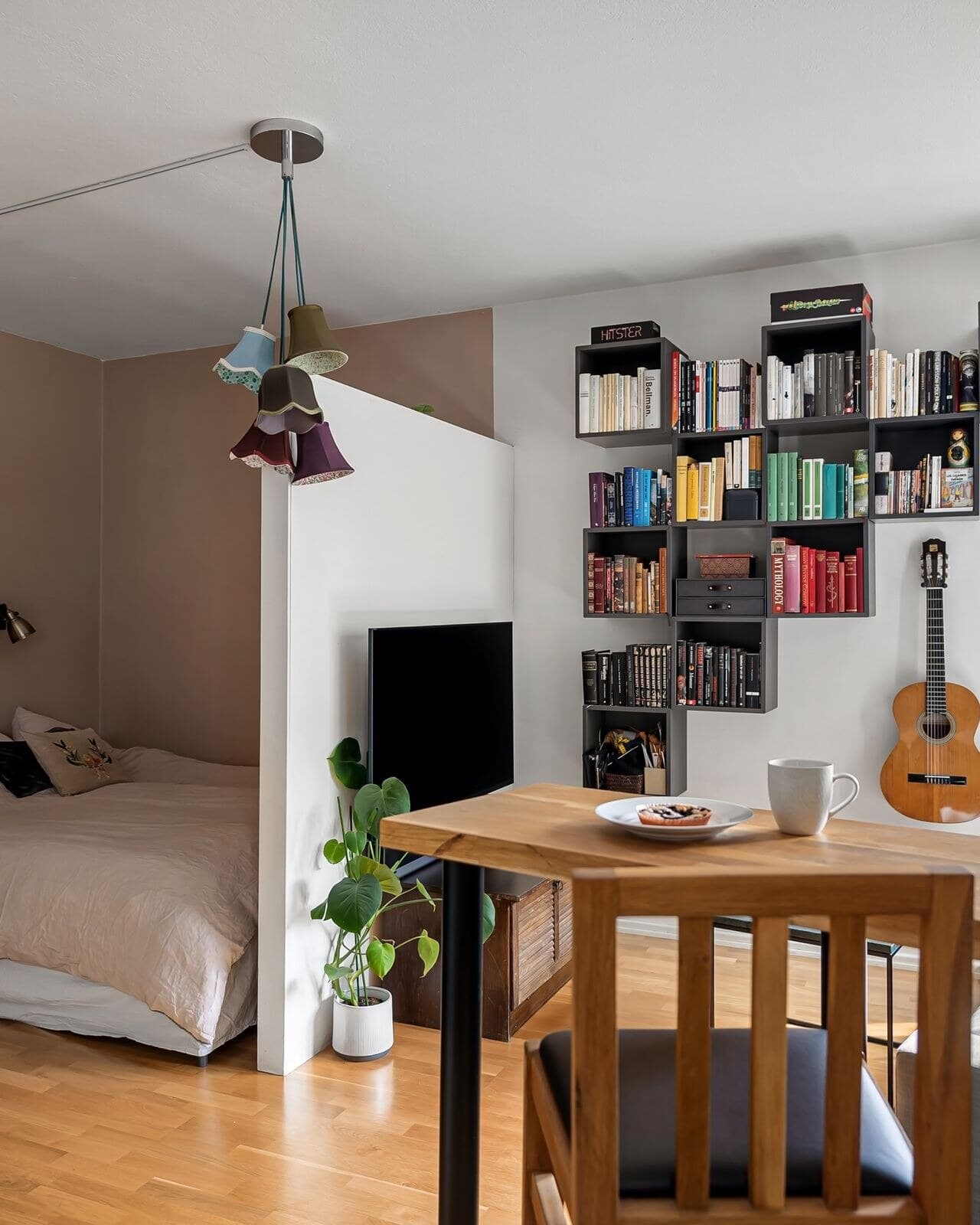
- 01Anchor a Freestanding Unit to the WallA tall shelf standing in open floor needs anti-tip hardware even more than one already braced against a wall.
- 02Keep the Bottom Shelves LightA lower center of gravity keeps a freestanding divider stable if it's bumped from either side.
- 03Leave Gaps, Not a Solid BackOpen shelving that still lets light through keeps the divide from feeling like a second wall.
- 04Measure the Walkway on Both SidesA divider only works if there's still a clear path around it into each zone.
RoomMinded Tip
A shelf that faces two rooms at once is doing the work of a wall without ever becoming one.
03 · Let Lighting Signal the Zone
Give Every Zone Its Own Light Switch.
A single overhead light treats the whole studio as one space, on or off together. Layering in a floor lamp for the living zone and a desk lamp for the work zone — each on its own switch or pull cord — lets you light one zone without lighting all of them, which reads as two separate rooms even with no wall between them.
Switching off the desk lamp while the floor lamp stays on sends the same signal a closed door sends in a multi-room apartment: that zone is done for the day, even though you can still see straight into it. It's a subtler cue than a rug or a shelf, but it works every evening without you having to move anything.
It costs nothing beyond the lamp itself and doesn't need to be repositioned the way a rug or a divider sometimes does — once each zone has its own light source, the zoning happens automatically every time you turn one lamp on and leave another off.

- 01Give the Work Zone Its Own SwitchA desk lamp on a separate switch or cord lets you end the work day without touching the rest of the room's lighting.
- 02Use Warmer Light for the Living ZoneA warmer bulb in the living area contrasts against a cooler, more functional desk light and reinforces the difference between zones.
- 03Avoid Relying on One Overhead FixtureA single ceiling light lights the whole studio at once, which works against zoning rather than for it.
- 04Position Lamps Where You'll Actually Reach ThemA lamp you have to walk across the room to switch off won't get used as a zoning cue in practice.
RoomMinded Tip
Turning one lamp off while another stays on is a door closing, even without a door.
04 · Add a Curtain or Screen Divider for a Rental
The Rental-Friendly Version of a Wall.
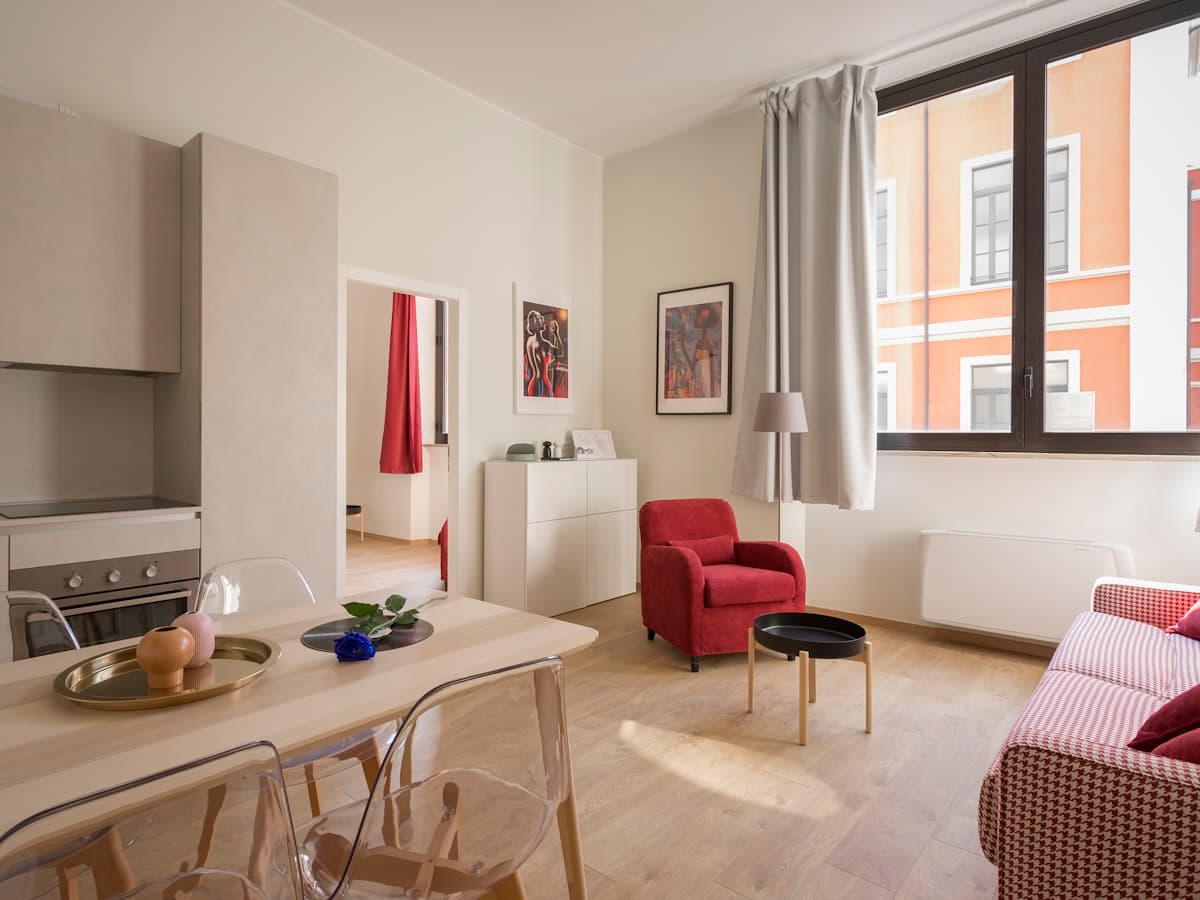
A ceiling-mounted curtain track or a folding screen creates an actual physical barrier, unlike a rug or a shelf — it can close the sleep zone off completely at night and open the room back up during the day, with no construction and nothing that has to be permanent.
A track mounted with tension or adhesive fixings, rather than screwed into the ceiling, keeps the whole setup renter-friendly — see renter-friendly decorating ideas for more damage-free ways to add a built-in feature to a space you don't own. A folding screen needs no fixing at all, which makes it the easiest option to try first.
A curtain or screen also gives you a clean, flat surface to lean something against — a full-length mirror included, which is exactly the kind of pairing how to use mirrors to make a small room look bigger covers in more depth.
Take This With You
- 01Choose Tension or Adhesive FixingsA track that doesn't need screws keeps a curtain divider entirely reversible at move-out.
- 02Try a Folding Screen FirstIt needs no wall fixing at all, which makes it the lowest-commitment divider to test before installing a track.
- 03Weigh Blackout Against AirflowA heavier curtain blocks more light and sound but can make the sleep zone feel stuffier — choose fabric weight deliberately.
- 04Leave the Curtain Open by DefaultClosing it only when needed keeps the room feeling like one open studio most of the time.
RoomMinded Tip
A curtain closes a zone off when you need it and disappears the rest of the time — a wall can't do either.
Next·Finish the Room With a Mirror That Doesn't Reflect Clutter
RoomMinded Picks
Pieces That Make
This Easier.
A few practical products for dividing a studio's zones without a permanent wall.
Storage · Floating Shelves
Set of 4 Latitude Floating Shelves
Open shelving pulled away from the wall and into the room reads as a divider, not just storage — the technique this guide's shelving section covers.
£12.99
View ProductLighting · Floor Lamps
IKEA NYFORS Floor Lamp
A lamp used on its own switch to mark the living zone independently of the room's main overhead light.
£70
View Product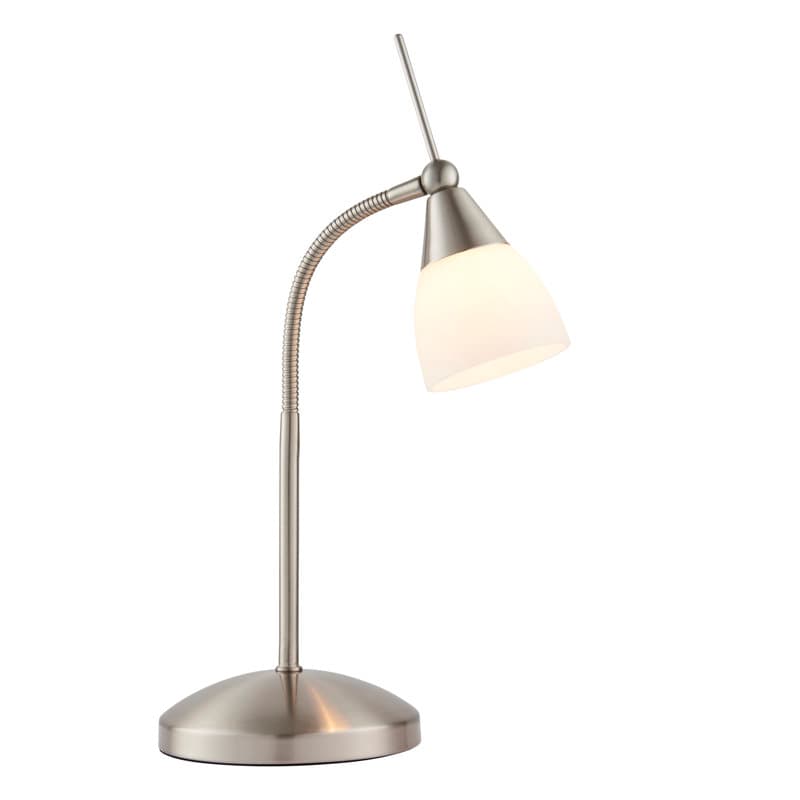
Lighting · Desk Lamps
Fairmont Park Abell 40cm Desk Lamp
A dedicated desk lamp that switches the work zone on and off separately from the rest of the room, doing the same signaling job a wall wouldn't.
£27.99
View Product
Living Room · Nesting Tables
Borough Wharf Kirkhill 3 Piece Nest of Tables
A flexible side table for whichever zone needs a temporary surface, without committing floor space to it permanently.
£36.99
View ProductThese are curated recommendations. If you purchase through one of our links, RoomMinded may earn a commission at no extra cost to you.
Keep Exploring
More Ideas for
Better Spaces.
A few more practical RoomMinded guides worth reading next.
Small Spaces
Studio Apartment Layout Ideas
Practical studio apartment layout ideas — zoning with furniture and rugs, choosing a bed placement that doesn't dominate the room, and keeping furniture low enough to protect sightlines.
Read GuideRenter-Friendly
Renter-Friendly Decorating Ideas
Damage-free ways to make a rented space feel like home — from adhesive hooks to plug-in lighting and freestanding furniture that goes with you when you move.
Read Guide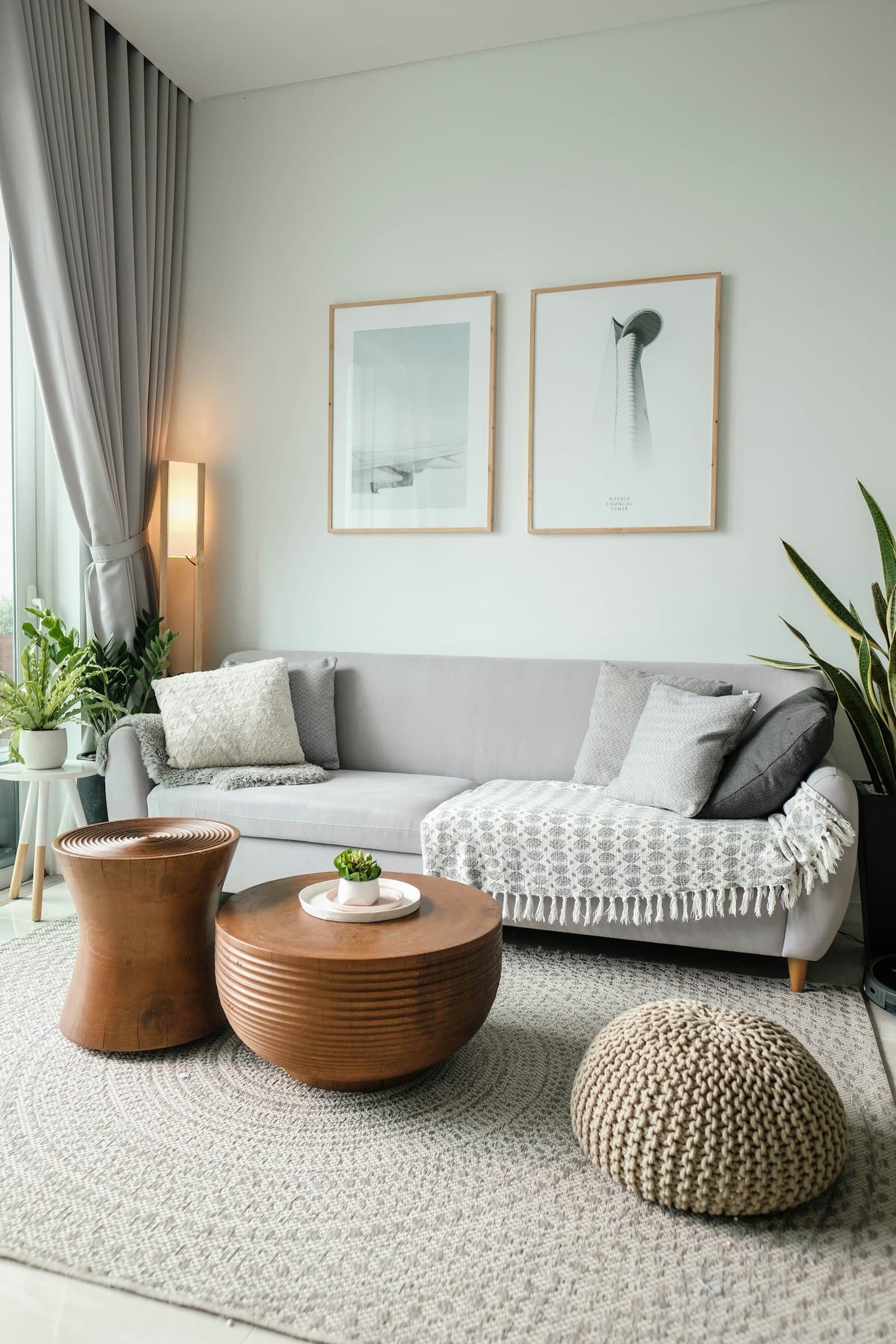
Small Spaces
How to Use Mirrors to Make a Small Room Look Bigger
Practical ways to use mirrors to make a small room look bigger — opposite a window, as a leaning full-length piece, and as a wall-filling gallery.
Read GuideGood to Know
Questions You
Might Have.
A few practical answers to common questions.
A rug — it's the fastest, most reversible boundary. Placing a rug under just one zone marks that patch of floor as its own space instantly.
Yes, when it's positioned perpendicular to the wall rather than flat against it. It blocks the direct sightline into the next zone while still letting light through.
Giving each zone its own lamp on its own switch lets you turn one zone 'off' without dimming the rest of the room, which reads as a boundary even with nothing physical between the zones.
A tension-mounted curtain track or a folding screen — both create a real physical barrier without any drilling, and both come down cleanly at move-out.
No — most studios only need one zone, usually sleep, to close off fully. The other zones typically work fine with just a rug or a lighting change.
Keep Making Your Space Work Better
Ready to Make
Your Space Work Better?
Explore more practical room ideas, smart solutions and thoughtfully chosen products for real homes and everyday living.