
Small Living Room Layout Ideas for Better Everyday Flow
Practical layout ideas for a small living room — choosing a seating arrangement that fits how you actually use the room, and keeping traffic paths open.
In This Guide
The Right Layout Does Most of the Work.
A small living room's layout usually matters more than any single piece of furniture in it. The same sofa can make a room feel cramped in one arrangement and comfortable in another.
This guide covers four things that shape how a small living room actually functions day to day: choosing a seating arrangement based on how you really use the room, letting furniture do more than one job, giving the room a clear focal point, and keeping traffic paths and sightlines open.
As with the rest of RoomMinded's guides, most of this can be tried by rearranging what you already have before you buy anything new.
01 · Choose Seating That Fits How You Use the Room
Design Around How You Actually Sit.
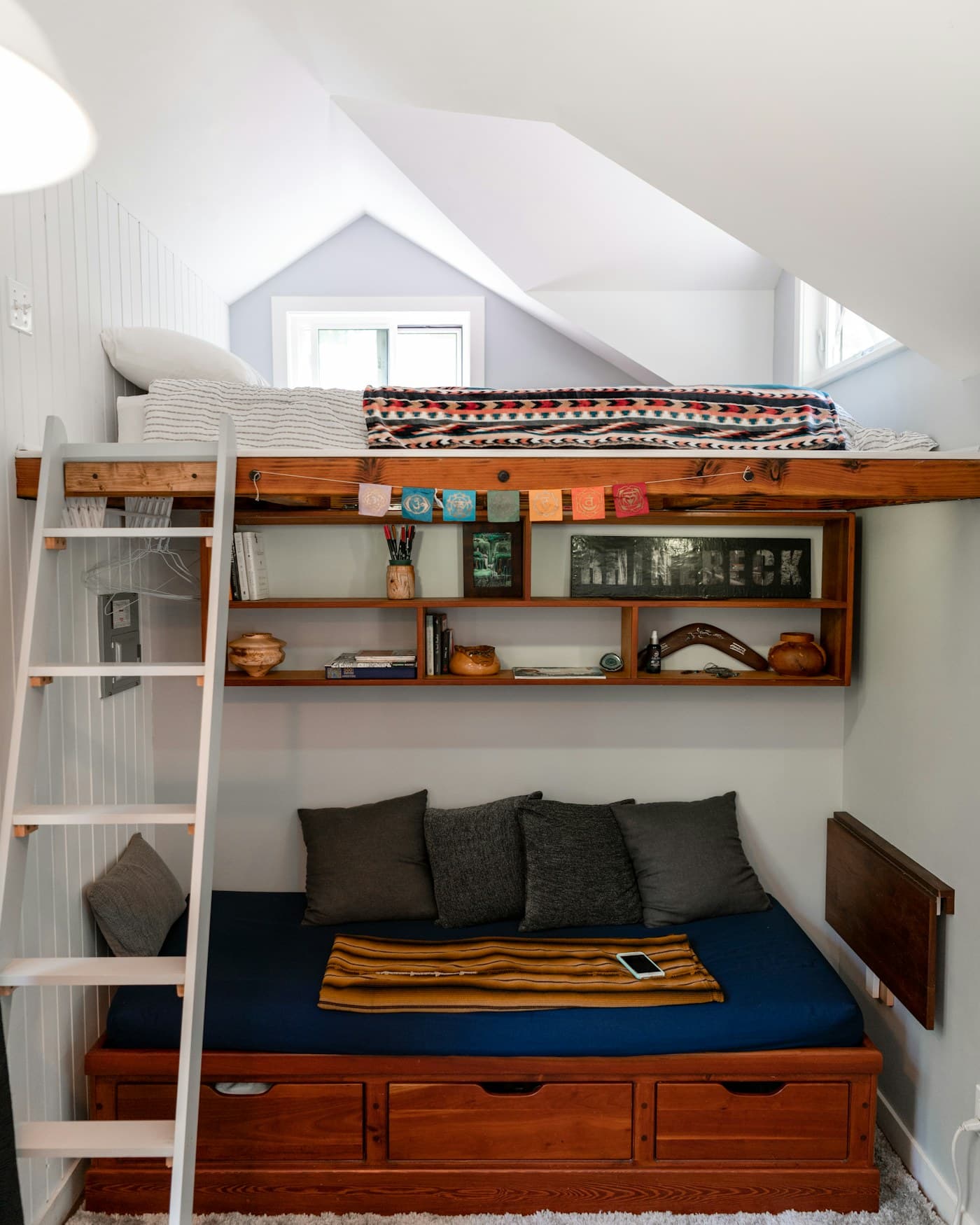
Before choosing a layout, think honestly about how the room gets used — is it mostly one or two people watching TV, or does it regularly need to seat guests? A layout built for entertaining a crowd can feel oversized and awkward for everyday use by one or two people.
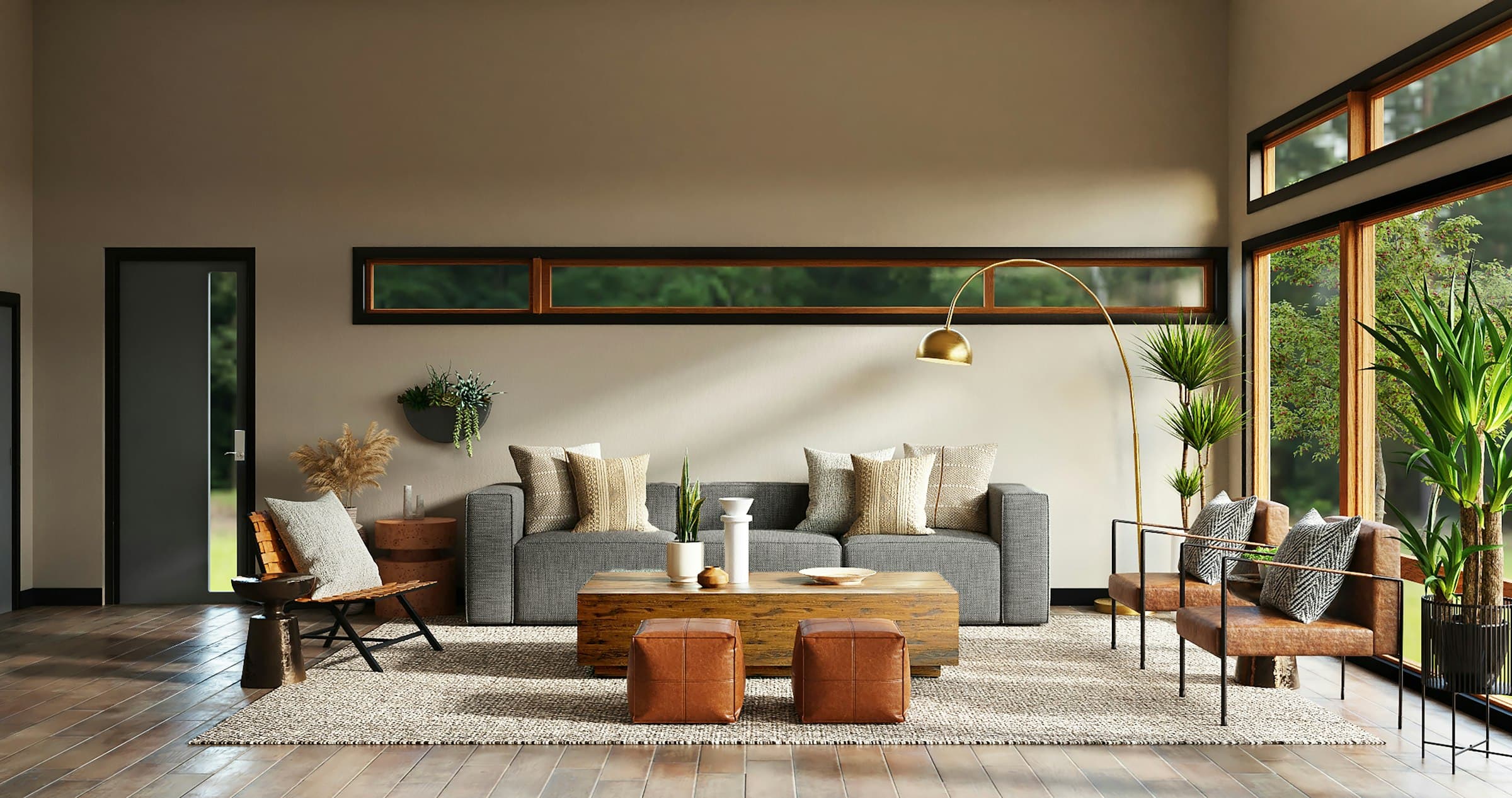
For most small living rooms, an L-shaped arrangement with a sofa and one or two chairs uses corners efficiently and creates a defined seating area, rather than furniture scattered around the room's perimeter.
If the room needs to flex between everyday use and occasional guests, lightweight or foldable seating that can be brought in only when needed is worth considering — see space-saving furniture ideas for options built around exactly that.
- 01Design for Everyday Use FirstBuild the main layout around how the room is used most days, not its occasional maximum capacity.
- 02Try an L-Shaped ArrangementAn L-shaped or corner layout uses space efficiently and creates a defined seating area.
- 03Add Flexible Extra SeatingA lightweight chair or stool that can be moved or stored covers occasional guests without permanently using floor space.
- 04Face Seating Toward Each OtherAngling seating to face inward, not just toward a screen, makes the room feel more like a place to sit and talk.
RoomMinded Tip
Design the room for the Tuesday it actually is, not the party it occasionally hosts.
02 · Let Furniture Do More Than One Job
Fewer Pieces, More Function.
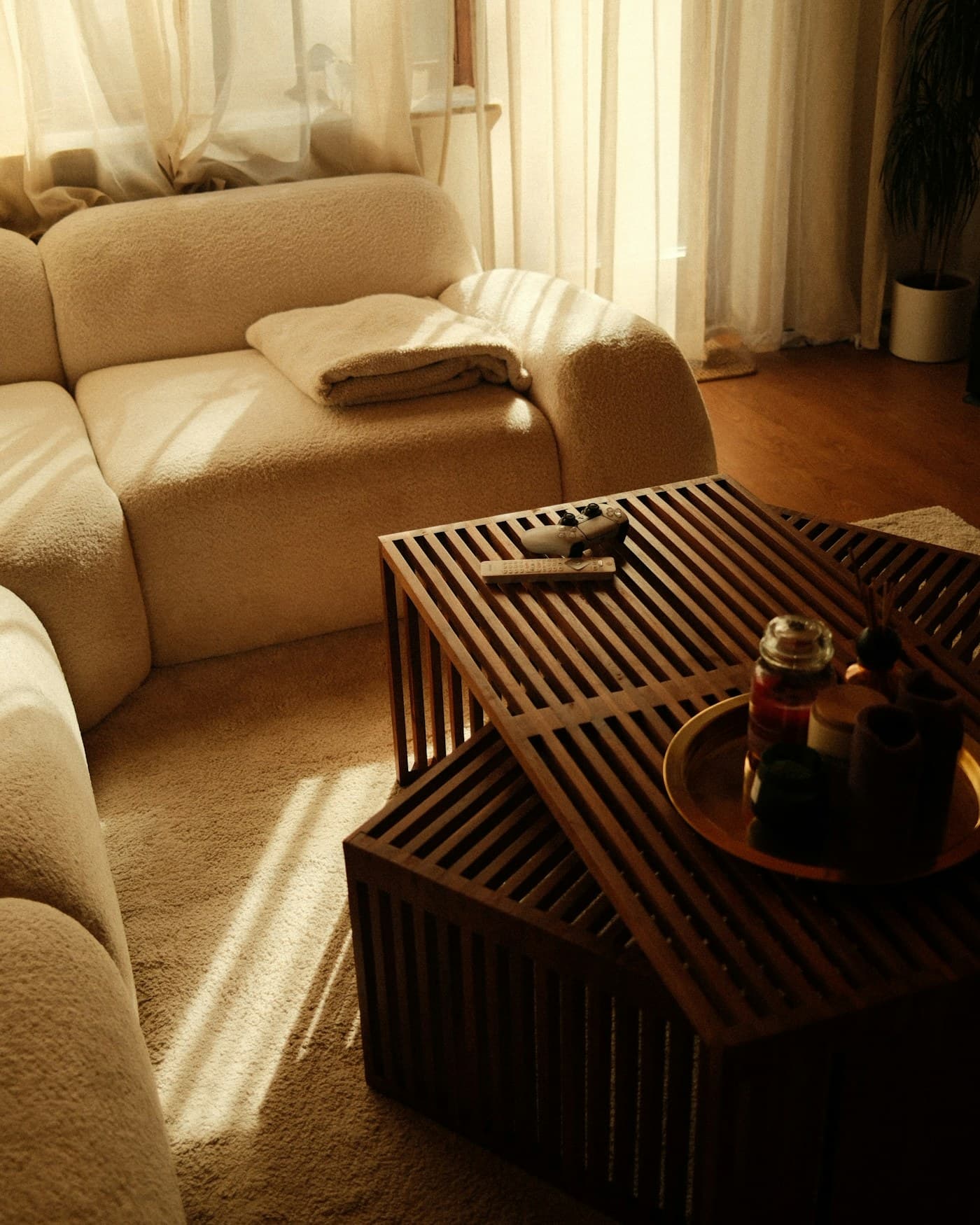
In a small living room, furniture that serves two purposes is almost always a better use of floor space than two separate single-purpose pieces. A storage ottoman doubles as seating and a coffee table; a set of nesting tables gives you one, two or three surfaces depending on the day.
A folding or extendable table is particularly useful if the living room also needs to double as a dining or work area occasionally — see setting up a home office in a small apartment for how a living room corner can flex into a workspace when needed.
The goal isn't to fill the room with dual-purpose furniture everywhere — one or two well-chosen flexible pieces is usually enough to notice the difference.

Solves This
Borough Wharf Kirkhill 3 Piece Nest of Tables
A set of nesting tables that expands to one, two or three surfaces depending on what the room needs that day — a practical example of this guide's multi-functional furniture section.
£36.99 · Shop This Pick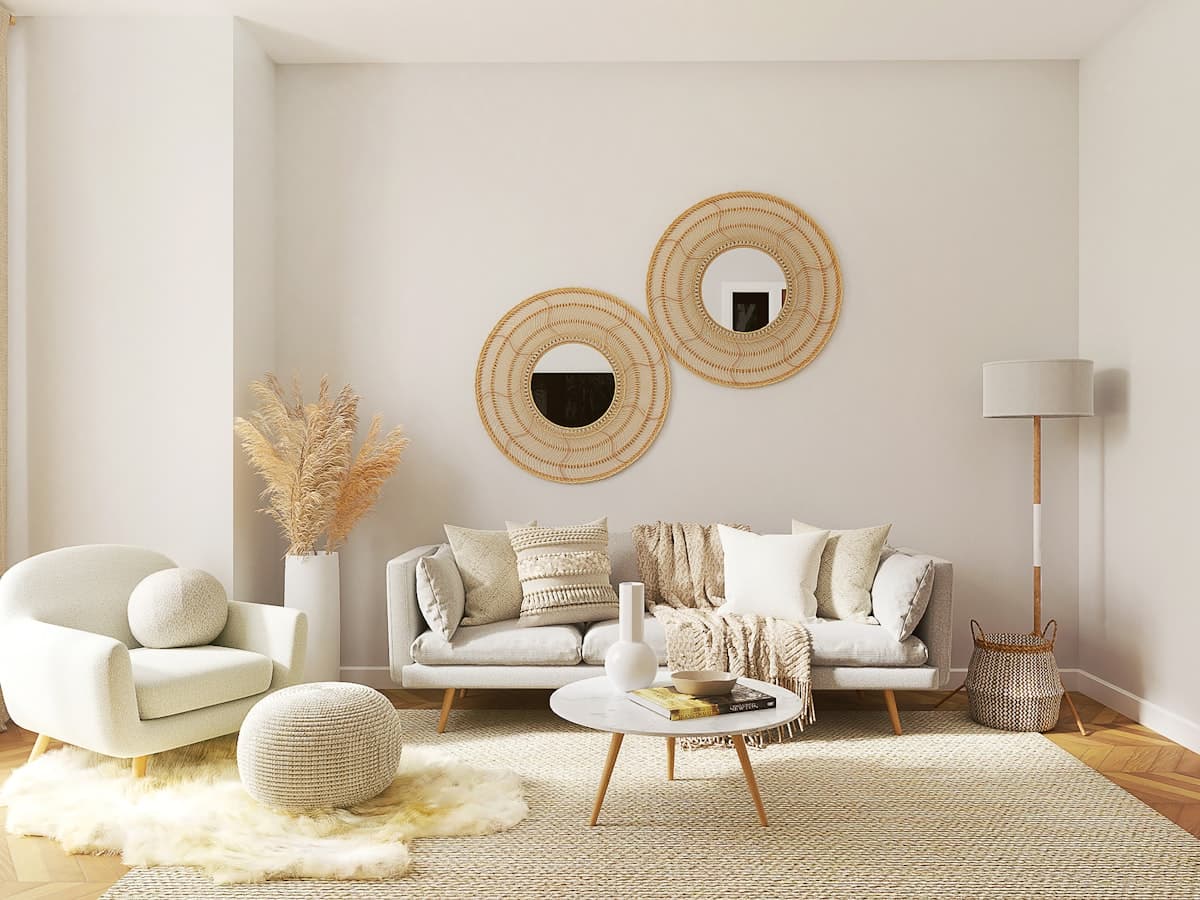
- 01Choose Furniture With Storage Built InAn ottoman or console with hidden storage adds function without adding a separate piece.
- 02Use Nesting Tables for Flexible SurfacesNesting tables expand when you need more surface area and tuck away when you don't.
- 03Consider a Folding or Extendable TableUseful if the living room occasionally needs to double as a dining or work space.
- 04Don't Over-Furnish With Dual-Purpose PiecesOne or two flexible pieces are usually enough — the room still needs some genuinely open space.
RoomMinded Tip
The best piece of furniture in a small living room is often the one doing two jobs.
03 · Give the Room a Clear Focal Point
Build the Layout Around One Thing.
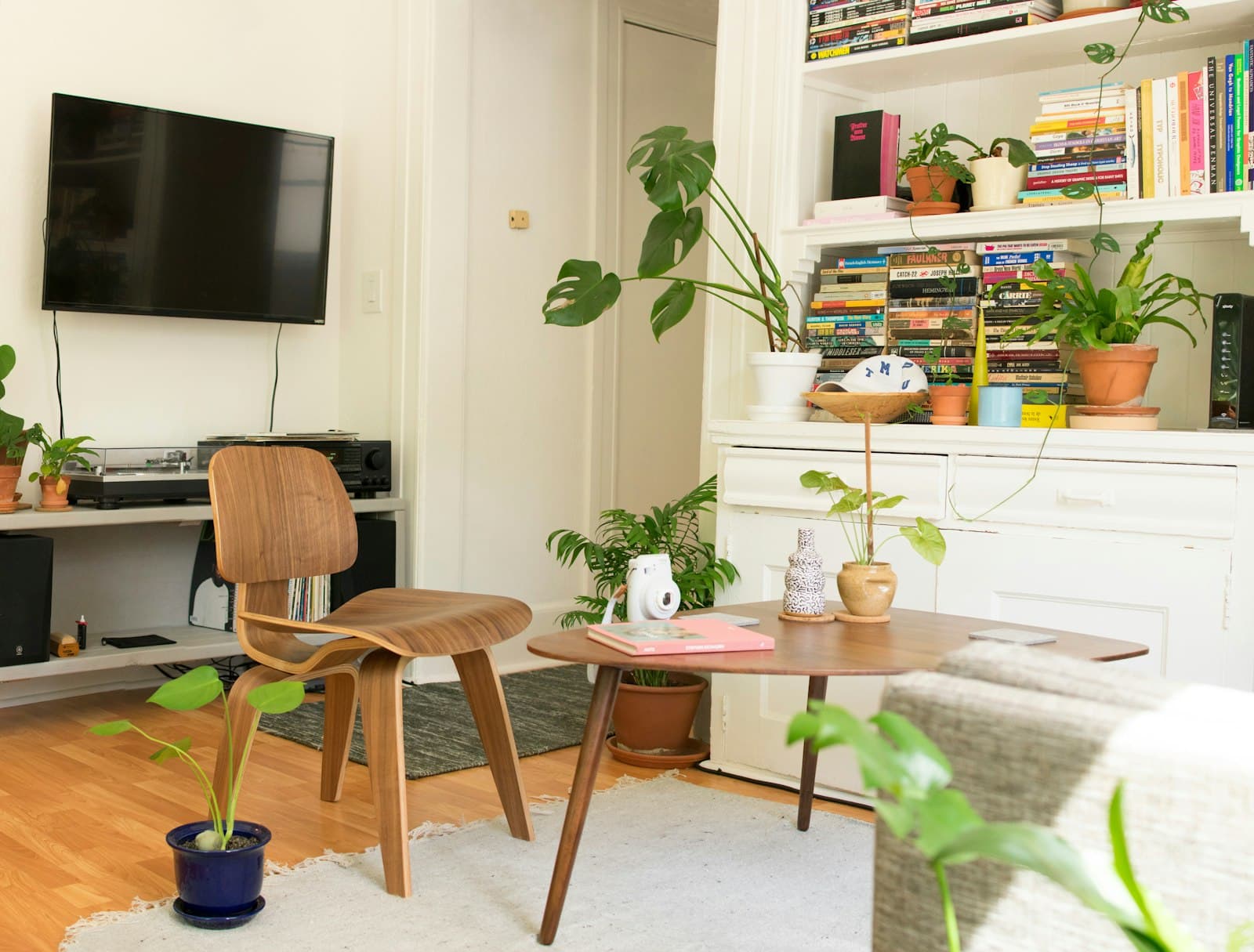
A small living room without a clear focal point can feel unsettled, with furniture and attention split between several competing areas. Choosing one — a window, a media unit, a reading chair by a lamp — and arranging seating around it gives the room a sense of purpose.
This doesn't need to be dramatic. A well-lit reading corner or a single piece of art above the sofa can be enough of a focal point in a smaller room, without needing a fireplace or large media wall.
Once the focal point is chosen, resist adding a second competing one — a small room usually reads as calmer with one clear anchor than with several smaller distractions.
- 01Pick One Focal PointChoose a single feature — a window, media unit or reading chair — to organize the room around.
- 02Arrange Seating Toward ItPosition the main seating to naturally face or relate to the chosen focal point.
- 03Keep It Simple in a Small RoomA focal point doesn't need to be a major architectural feature — good lighting and a considered arrangement are enough.
- 04Avoid Competing Focal PointsA second strong visual anchor tends to split attention rather than add interest in a smaller room.
RoomMinded Tip
A room organized around one clear idea feels calmer than one trying to be several things at once.
04 · Keep Traffic Paths and Sightlines Open
Leave a Way Through.
However good a layout looks, it doesn't work if you have to squeeze past furniture to get through the room. Map out the paths you actually walk — to the door, to the kitchen, past the sofa — before finalizing where furniture goes.
As a general guide, leaving at least a narrow, clear walkway between major pieces of furniture keeps the room usable day to day, even if it means a slightly smaller seating arrangement than you first pictured.
These layout principles apply just as well throughout the rest of a small home — see how to make a small room feel bigger for the same thinking applied more broadly, room by room.
Take This With You
- 01Map Your Actual Walking PathsIdentify where you walk through the room regularly before deciding on furniture placement.
- 02Leave Clear WalkwaysKeep at least a narrow clear path between major pieces so the room stays easy to move through.
- 03Don't Block Sightlines to Windows or DoorsKeeping key sightlines open helps a small room feel more open, not just more walkable.
- 04Prioritize Function Over a Slightly Larger LayoutA slightly more compact arrangement that keeps paths clear beats a larger one that doesn't.
RoomMinded Tip
A layout only works if you can actually walk through it.
Next·Bring the Rest of the Room Together
RoomMinded Picks
Living Room Picks
for a Better Layout.
A few practical products for building a flexible, well-organized small living room.

DINING
Habitat Drew Folding Bamboo 2 Seater Table (White)
A folding table that can support the room doubling as a dining or work space occasionally, then fold away to keep the main layout open the rest of the time.
£49
View ProductLIVING ROOM
Borough Wharf Kirkhill 3 Piece Nest of Tables
A set of nesting tables that expands to one, two or three surfaces depending on what the room needs that day — a practical example of this guide's multi-functional furniture section.
£36.99
View Product
STORAGE
Strata 21L Urban Storage Basket with Lid, Cool Grey
A lidded basket that can double as extra storage near a media unit or seating area, keeping everyday items out of sight without needing a large cabinet.
£6.99
View Product
LIGHTING
Dunelm Fentress Large Recycled Glass Table Lamp
A table lamp suited to lighting a reading corner or side table, useful for giving the room a warm, considered focal point.
£55
View ProductThese are curated recommendations. If you purchase through one of our links, RoomMinded may earn a commission at no extra cost to you.
Keep Exploring
More Ideas for
Better Spaces.
A few more practical RoomMinded guides worth reading next.
Small Spaces
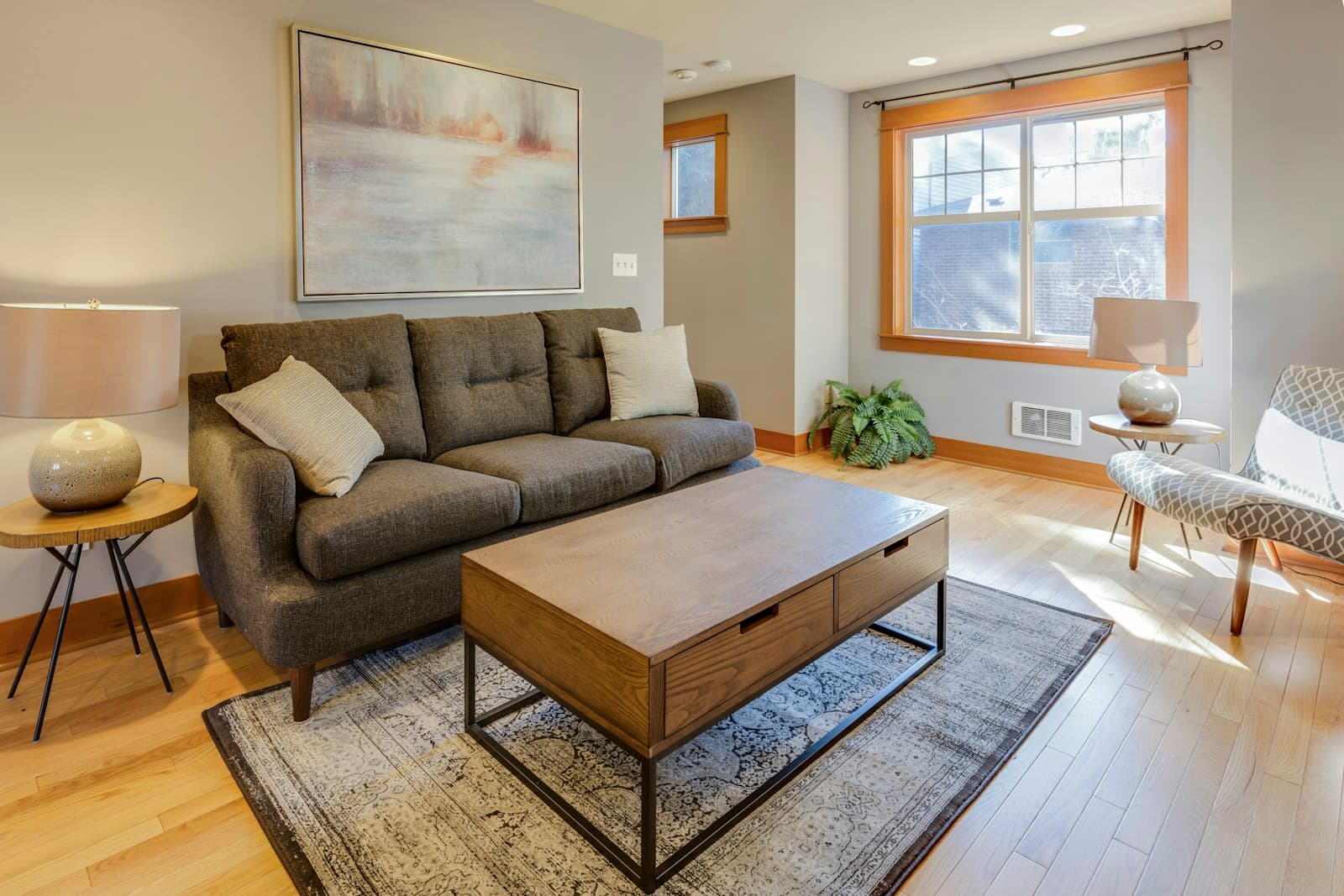
How to Make a Small Room Feel Bigger
Discover practical small room ideas for better layouts, space-saving furniture, smarter storage and lighting that can make your home feel more open and comfortable.
Read Guide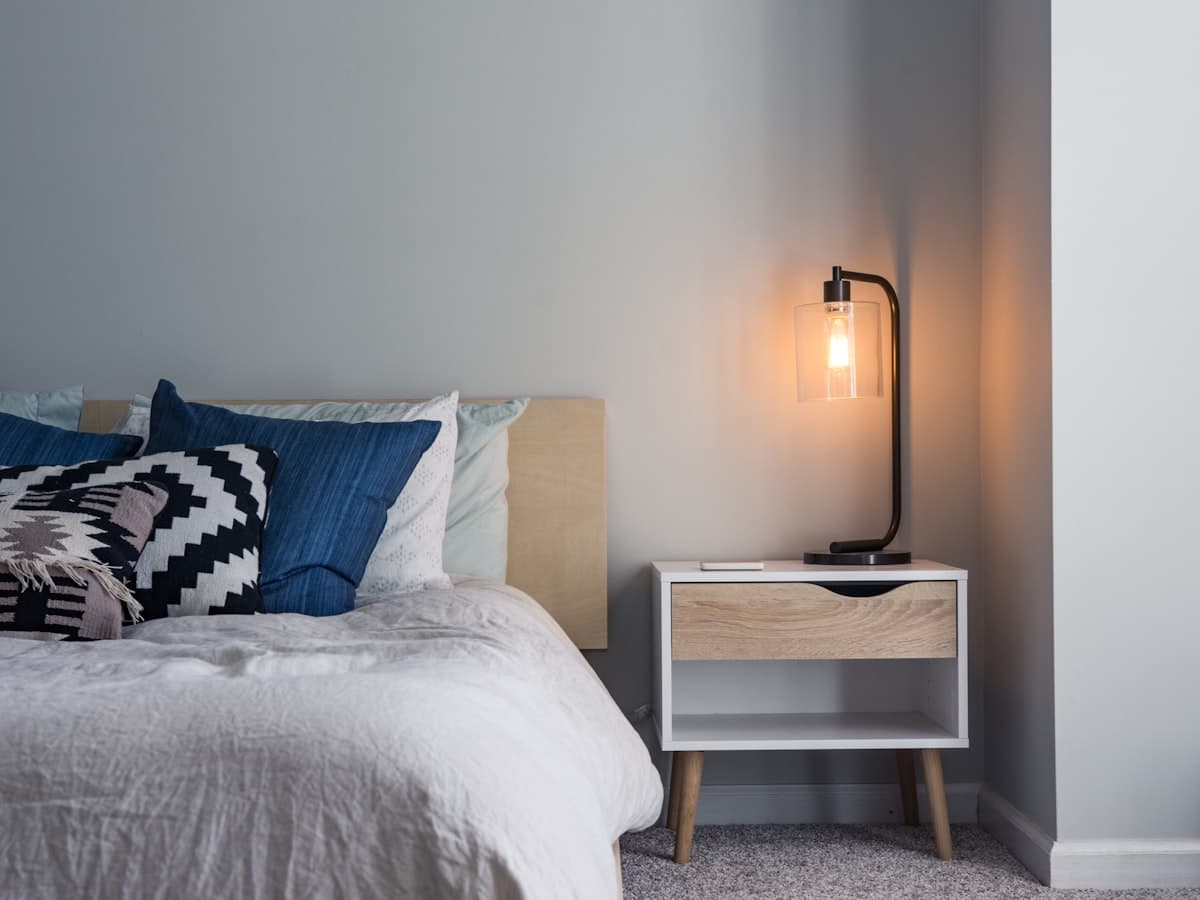
Better Lighting
Lighting Ideas for a Small Apartment
A practical, room-by-room approach to lighting a small apartment — layering natural, ambient, task and accent light so every room feels brighter without a renovation.
Read Guide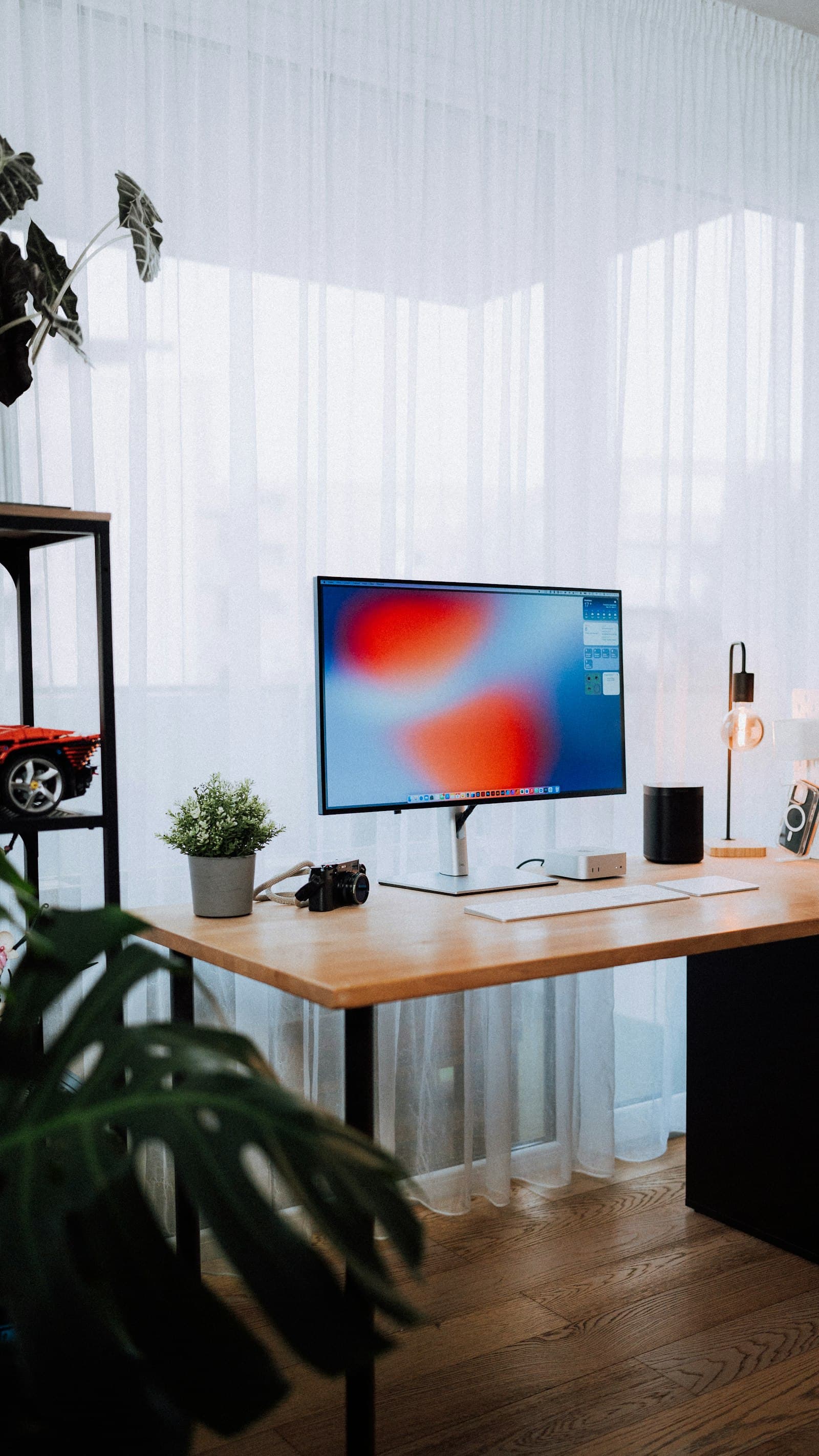
Home Office
How to Set Up a Home Office in a Small Apartment
A practical approach to setting up a home office in a small apartment — finding a dedicated spot, choosing furniture that supports a full workday, and keeping work contained to its corner.
Read GuideGood to Know
Questions You
Might Have.
A few practical answers to common questions.
It depends on how you use the room, but an L-shaped seating arrangement that uses a corner efficiently works well for most small living rooms.
Leave at least a narrow, clear path between major furniture pieces — enough to walk through comfortably without turning sideways.
Yes — organizing seating around one clear focal point, like a window or media unit, tends to feel calmer than a room without a clear anchor.
Often yes, especially pieces like storage ottomans, nesting tables or folding tables that let one item cover more than one need.
Yes, with the right flexible furniture — a folding table or nesting tables can let the room shift between uses without a permanent layout change.
Keep Making Your Space Work Better
Ready to Make
Your Space Work Better?
Explore more practical room ideas, smart solutions and thoughtfully chosen products for real homes and everyday living.